Apply to a foreign university with confidence
- Properly fulfilled documents
- Perfect motivation letter
- Support from a personal mentor
- Offers from several universities
How much does a language course in Switzerland cost, what are the requirements and features, and how to choose the best city to study German.
Free consultation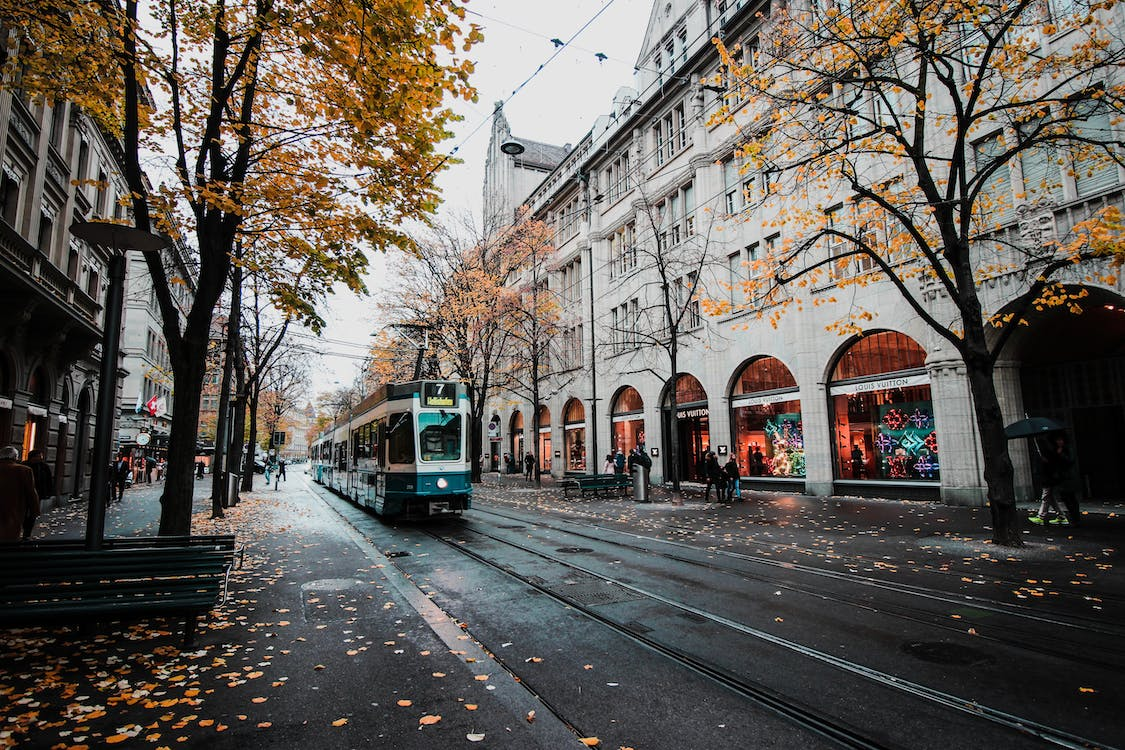
German language courses in Switzerland are not very popular among foreigners. In a country with a population of 8.7 million, only 5.5 million people speak German[1], which is why students are more likely to study the language in neighboring Germany or Austria.
However, Switzerland offers many options to comfortably learn German: you can choose the appropriate course that meets your needs (summer camps for children, exam preparations, German for work) and combine it with a varied extracurricular program.

To enroll in a language course in Switzerland, several factors must be taken into account: school accreditation, the type and intensity of the program, accommodation, and visa processing.
UniPage only works with proven language centers that provide quality education. We will help you choose a program, send an application, pay for the course, and deal with the nuances when signing an agreement with a school.
Partner schools also provide our customers with discounts and special offers.
| Type of program | Intensity | Group | Min. language requirements | Min. cost per week |
|---|---|---|---|---|
| Semi-intensive courses | 10 | 6-12 | Starter (A0) | 274 USD |
| General courses | 20 | 6-12 | Starter (A0) | 396 USD |
| Intensive courses | 24-30 | 6-12 | Elementary (A1) | 566 USD |
| One-to-one Courses | 5-50 | 1 | Starter (A0) | 633 USD/5 lessons |
| Exam preparation | 30 | 6-12 | Intermediate (B1) | 694 USD |
| Fide test preparation | 4 | 2-6 | Elementary (A1) | 182 USD/4 lessons |
| Business German courses | 5-50 | 1 | Starter (A0) | 804 USD/5 lessons |
| Club 40+ | 20 | 6-12 | Starter (A0) | 968 USD |
| Study & Live in Your Teacher's Home | 10-30 | 1 | Starter (A0) | 1,462 USD |
| Language summer/winter camps | 8-20 | 6-12 | Starter (A0) | 1,084 USD |
| Language courses at universities | 2-4 | 5-10 | Elementary (A1) | 329 USD |
Schools in Switzerland offer standard courses where students practice their language skills: Semi-intensive, General, and Intensive. These programs differ from each other only in the number of academic hours per week. There are also individual one-to-onecourses, where the intensity of the classes is chosen by the student himself.
In addition, you can choose from courses that differ from the standard format or curriculum.
Business German courses. This format is aimed at specialists in various fields who want to improve their professional German. During the lessons, students practice additional vocabulary and conversational skills that are necessary for communication in a work environment.
Club 40+. These are courses for students over the age of 40. Generally, this is a regular German course, but extracurricular activities are adapted to the interests of the older generation: museums and galleries, theaters, botanical gardens, and out-of-town excursions. The duration is 1-4 weeks.
Study & Live in Your Teacher's Home. This program allows students to live and study directly in the home of their teacher. The format has many advantages: students can independently choose the intensity of the lessons, do not waste time commuting to a language school, and can practice skills with their teacher after class: during meals, walks, and other daily activities. In addition, you can find a teacher with experience in teaching professional German in various fields: medicine, aviation, architecture, tourism, and so on.
Language camps. These are courses for children and teenagers from 6 to 17 years old. In addition to German lessons, the program includes various activities: master classes (art, etiquette, cooking, making Swiss watches), sports, and excursions.
Fide test preparation. TheFideexam tests German proficiency, which is needed in everyday life in Switzerland: when visiting a doctor, shopping, or going to work. It confirms A1-B1 level proficiency. The short course is designed to prepare you for this exam. As a rule, it is taken by immigrants who need a certificate confirming proficiency for the purpose of naturalization.
Language courses at universities. Some universities in Switzerland, such as Berne or Friborg, offer German language courses that are available only for students of these or partner universities. Pathway or Foundation preparatory programs with German courses are not available in Switzerland.
More about the types of language courses
There are few schools for foreign tourists that offer accommodation and excursions in Switzerland. Language centers develop mainly long-term courses. This is primarily due to the fact that the country is home to many immigrants who would like to learn the local language. Moreover, German language courses are designed for those who are already working in Switzerland: classes are held in the evening, 2-3 times a week, for 3 or more months.
At the same time, when choosing a school, you should make sure that it has all the necessary accreditations. If you pay for a course and receive an invitation, but the school is not accredited, you will be denied a visa.
To enroll in language courses, you need to:
Difficulties arise when the student gets acquainted with the contract, which is usually drawn up in English. It is important to carefully read the clauses on the possibility of a refund in case of a visa refusal or cancellation of the course. Different schools have varying conditions: some will fully refund the entire amount, but they most often withhold part of the payment. The refund amount depends on the reason and the number of days before the start of the course.
Schools do not usually impose language proficiency requirements: upon arrival or before applying, students take a test to determine the appropriate group level. However, exam preparation programs are only available from the B1 level. Therefore, the conditions for admission should be specified on the school website.
Although Swiss German is spoken in Switzerland, language courses cover Standard German (Standarddeutsch) — the generally accepted version of the language. During the lessons, you will quickly improve your language skills. Every day, you study grammar, new vocabulary, and pronunciation, and continue with speaking, reading, writing, and listening practice. Teachers immerse students in the language environment through role-playing games and usage of authentic materials (newspapers, magazines, and so forth).
Accommodation and meals at Swiss language schools are not included in the course fee. However, some schools help find housing.
| Accommodation options | Meals | Number of people per room | Min. cost per week | Avg. cost per week |
|---|---|---|---|---|
| Host family | breakfast + lunch + dinner | 1-2 | 323 USD | 420 USD |
| School residence | optional | 1-2 | 183 USD | 512 USD |
| Hotel | optional | 1 | 767 USD | 1,279 USD |
| Apartment | covered by the student | 1 | 975 USD/month | 1,424 USD/month |
| Expense | Min. | Avg. |
|---|---|---|
| Embassy consular fee | 40 USD | 90 USD |
| Registration fee | 134 USD CHF | 125 |
| Check-in fee | 152 USD | 152 USD |
| Medical insurance | 17 USD/week | 32 USD/week |
| Teaching materials | 18 USD/week | 37 USD/week |
| Delivery of an invitation by express mail | 134 USD | 171 USD |
| Airport transfers | 189 USD | 201 USD |
Check the school website for additional costs.
| Service | Cost |
|---|---|
| Complete guidance in registering for courses — language schools abroad | 38,000 ₽ |
| Complete guidance in the admission process — university language courses | from 75,000 ₽ |
| Visa guidance | 69,000 ₽ |
A student can study in Switzerland on a Schengen category C visa, which gives the right to stay in the EU for up to 90 days. Consideration of the application usually does not exceed 15 days. However, the embassy may require additional reviews, so it is best to apply for a visa at least one month before the trip.
Necessary documents for a Schengen visa:
If language courses go on for more than three months, you need to obtain a national category D visa. The processing time depends on the region (canton) in which the student is going to study — on average, 2-3 months.
To obtain a national visa, the following documents will be required:
Additionally for underage applicants:
Holders of a category C visa cannot get a job in Switzerland.
You can work with a category D visa, but only if you study at a university. However, you are restricted to no more than 15 hours a week.
In all other cases, including studying at language schools, you must obtain a work visa and permission before entering Switzerland — but it is extremely difficult to do this, given that priority in employment is always given to local candidates (citizens of Switzerland and the EU). Illegal labor activity threatens with serious consequences, up to deportation from the country and a ban on entry into the Schengen zone[3].
LSI is an international network of language schools with centers in 13 countries. One of the schools is located in Zurich and offers German courses for all age groups. Children and teenagers (6-17) can go to language summer or winter camps, adults (16+) choose standard German courses, and special extracurricular activities are developed for the older generation (40+).
The center also offers Goethe Zertifikat exam preparation, which is taken when entering German universities. The student chooses the duration himself: from 1 to 48 weeks. The cost of the program only includes classes — accommodation, meals, and extra-curricular activities are paid for separately. On average, a week of the course with accommodation and meals will cost 1,462 USD.
Switzerland is divided into 26 canton regions. In 17 cantons, the official language is German. When choosing a city for language courses, pay attention to the official language of the canton in which it is located. By choosing the right region, you will have more opportunities to practice.
| Canton (region) | City | Population | Expenses per month |
|---|---|---|---|
| Zürich | Zürich | 341730 | 1,877 USD |
| Basel-Stadt | Basel | 164488 | 1,894 USD |
| Bern/Berne | Bern | 121631 | 1,657 USD |
| Zürich | Winterthur | 91908 | 1,755 USD |
| St. Gallen | St. Gallen | 70572 | 1,755 USD |
| Lucerne | Lucerne | 57066 | 1,977 USD |
| Bern/Berne | Thun | 42136 | 1,755 USD |
Zürich is the center of economic life in Switzerland: people come here for shopping, luxurious restaurants, and entertainment. Bahnhofstrasse is one of the most famous shopping streets. It stretches for one mile from the main railway station to Lake Zürich. In addition, there are more than 50 museums and 100 galleries in Zürich.

In Bern, the official capital of Switzerland, there are many things to do for tourists: from walking through the old town, where you can see the old 500-year-old fountains, to hiking the Gurten mountain.
Also, the Einstein Museum is located here — the apartment where the scientist lived and worked from 1903 to 1905.

The city stands on the Rhine River, and during the warmer months, locals come to rest on its coast: rafting down the river on a boat, eating dinner on board, or simply having picnics.
Basel is called the most "cultural" city in Switzerland, primarily because of the number and variety of museums (Tinguely Museum, World of Toys, Basel Paper Mill, and so on).

With its well-preserved historic buildings and medieval atmosphere, Lucerne is one of Switzerland's favorite tourist destinations. The key location in the city is the oldest covered wooden bridge in the world (Kapellbrücke). It was built in 1333, and now this place appears more often than others in photographs of tourists.
An event worth visiting is the Lucerne Carnival. For 600 years, every February, the townspeople gather in the city center and, together with artists in frightening masks, see off the winter to the sound of drums.

Want to learn a foreign language, improve your conversational skills, and prepare for exams?
UniPage specialists will select language programs according to your goals, interests, and budget, and help with enrollment.